


Veotec Patented Liquid Cooled Air Inlet Louvers Are Reshaping Cooling Efficiency for Data Centers and Gas Turbines
Download PDF
As data centers and power generation facilities face rising thermal loads, water scarcity concerns, and growing pressure to improve energy efficiency, airflow management has become more important than ever. Advanced inlet technologies are emerging as a critical part of the solution, especially for high-density server environments, gas turbine systems, and other mission-critical applications. Improving energy efficiency is critical for the data center ecosystem, especially as AI workloads and high-density computing continue to expand thermal demands.
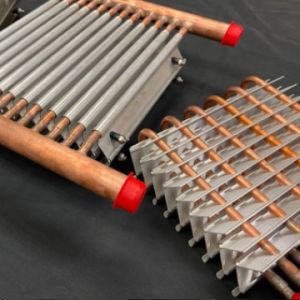
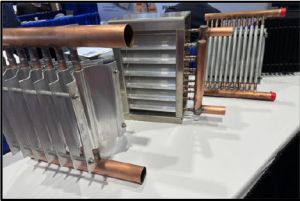
Veotec Americas patented fluid-chilled radiator coil style air inlet louver systems offer an innovative development in this space. These high-efficiency air inlet louvers combine durable impact-resistant louver separators integrated with radiator-style coil tubing to heat or chill incoming air directly at the first stage of the ventilation system inlet. This approach delivers a powerful combination of environmental protection, thermal management, and energy optimization for modern data centers, gas turbines, marine systems, HVAC systems, and offshore installations.
Cooling and Heating at the Air Inlet Stage
Veotec Americas coil-style heating and cooling louvers conditioning the air immediately as it enters the system. This thermal louver technology can achieve thermal performance comparable to a 2-row or 4-row radiator-style coil configuration while maintaining low airflow resistance.
Using available fluid temperatures, the louver system can:
- Chill incoming air to reduce operating temperatures
- Heat incoming air to prevent harmful snow, ice, or hoar frost buildup
- Improve environmental conditions before filtration stages
- Reduce dependency on evaporative cooling systems
- Enhance operational efficiency and reliability
Sustainable Cooling and Water Efficiency
Water usage has become one of the biggest thermal management challenges facing the data center industry. Many facilities still rely heavily on evaporative cooling technologies that consume significant amounts of water.
Fluid-chilled air inlet louvers offer a more sustainable cooling solution by reducing dependency on evaporative systems. When combined with mechanical, hybrid adiabatic systems, geothermal cooling, these inlet louvers can dramatically reduce water consumption while delivering advanced cooling performance.
Benefits include: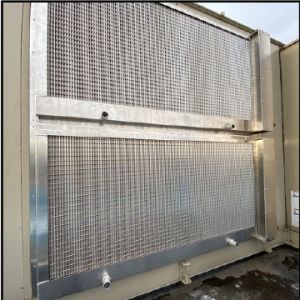
- Reduced water usage
- Improved environmental sustainability
- Enhanced cooling innovation
- Lower operating temperatures
- Improved reliability
- Better airflow optimization
- Reduced maintenance
Built for Critical Applications
Veotec Americas engineered these patented inlet louvers for some of the harshest and most demanding environments in the world. Applications include:
- Data centers
- Gas turbine power generation
- Offshore platforms
- Marine ventilation systems
- Industrial HVAC systems
- Mobile trailer cooling systems
- Critical airflow environments
Why Cooler Air Matters in Data Centers and Gas Turbines
Cooling incoming air can significantly increase air density, improving mass flow and thermal performance. In gas turbines, increased mass flow may improve power output. In data centers, cooler intake air supports more effective CPU and GPU thermal management for high-density server environments.
The impact of temperature on airflow density is substantial:
- 200,000 CFM at 100°F = 851,786 lb/hr (189,286 SCFM)
- 200,000 CFM at 80°F = 883,333 lb/hr (196,296 SCFM)
- 200,000 CFM at 65°F = 908,571 lb/hr (201,905 SCFM)
As inlet air temperatures decrease, airflow mass increases. That additional density can help support future performance needs while improving cooling effectiveness throughout the facility.
Supporting New Construction and Retrofit Projects
One of the major advantages of radiator coil style inlet louvers is their adaptability for both new construction and retrofitting existing data centers or turbine systems. Facility operators looking to modernize cooling infrastructure can integrate fluid heating or chilling directly into existing air intake systems without redesigning entire facility.
This flexibility supports:
- Advanced cooling technologies
- Chilled air circulation
- Geothermal integration
- Air cooling for thermal management
- Liquid cooling support systems
- Enhanced return on investment
- Reduced downtime risks
As thermal loads continue to increase across critical industries, first-stage inlet cooling and heating technologies are becoming an increasingly important tool for improving reliability, energy savings, and long-term sustainability.
Advancing the Future of Thermal Management
The future of data center and gas turbine performance depends heavily on smart thermal management strategies. From geothermal cooling to hybrid cooling systems and advanced liquid cooling integration, operators are seeking technologies that maximize efficiency while minimizing environmental impact. Patented fluid-chilled radiator coil style air inlet louvers represent a new approach to sustainable airflow management — conditioning air precisely where it matters most.
By combining air separation, anti-icing protection, chilled air circulation, and radiator-style thermal transfer into a single high-efficiency inlet system, Veotec Americas Liquid Cooling Louvers are helping advance the next generation of cooling innovation for critical infrastructure worldwide.
Veotec Heated Snow Melt Louvers
Veotec Americas have been building air inlet louvers in Minnesota since 2012. Over the years we have developed a family of louver styles and services to meet many market needs:
– Standard louvers such as SE, SC and SR series are GOOD for most nonfreezing environments.
– Electrically heated louvers such as the SETH and SETH-MI, are BETTER and will also deal effectively with many winter conditions, including wet fluffy snow.
– Fluid heated louvers such as SEFH are the BEST and will mitigate all types of snow and winter conditions.
– Veotec Americas louvers and vane separators are made in the USA
Water efficiency testing can show water removal effectiveness based on a laboratory test, but water efficiency doesn’t translate into snow efficiency. Snow typically bounces off or blocks up the cold surface of non-heated louver blades like it does on a cold windshield. A high performing water removal louver may have very little efficiency against snow, freezing mist, ice, and hoarfrost. Snow and freezing precipitation can build up on air filters and other downstream processes it is intended to protect.
Screens may remove some water and snow from air inlets, but most screens quickly block up with ice in freezing conditions. Electrically heated screens may work in a small performance window but can quickly become overwhelmed by cold air temperatures and some light precipitation. An overwhelmed screen can ice over and block all airflow to an inlet.
Veotec SETH Electrically Heated Louvers
Veotec SETH Electrically Heated Louver are designed to gently melt snow and ice without significantly heating the air. Veotec SETH Electrically heated louvers work like a rear defrost system on a car. A rear defrost system melts snow on your window but it will not heat the car. The louvers will not be warm to the touch if conditions are below freezing. The louver temperature may dip below freezing and 1-2°F air temperature rise is common. Any melted snow is drained away to keep the downstream air filters and processes dry. 500 FPM face velocity is a reasonable maximum flow for melting snow and freezing precipitation with electric heated louvers. Snow melt power is available from 200 to 800 watts per square foot.
Veotec SETH-MI High Output Electrically Heated Louver has double the heat and is designed for improved snow melt without significantly heating the air. Don’t expect SETH-MI Electrically Heated Louvers to feel warm in freezing air conditions. The louvers may not be warm to the touch if conditions are below freezing. 2-14°F air temperature rise is common. Any melted snow is drained away to keep the downstream air filters and processes dry. 800 FPM face velocity is a reasonable maximum flow for melting snow and freezing precipitation with electric heated louvers. Snow melt and anti-icing power is available from 200 to 2000 watts per square foot.
SETH and SETH-MI heating elements typically use Class 1, Div. 2 heating elements rated T2C or T2D for use in ordinary (nonclassified) areas and hazardous (classified) areas. Class 1, Div. 1 heating elements are also available on request.
Veotec SEFH Fluid Heated and Chilled Louvers
Veotec SEFH Fluid Heated coil style Louvers are designed to aggressively melt snow and ice in any ambient conditions on high efficiency fluid heated louvers while also heating the air. Veotec SEFH Fluid Heated Louvers are built like a radiator coil but using durable louvers instead of thin standard radiator style fins. Heated fluids like propylene glycol blends are circulated through the louver pack like a standard heating coil. The heating performance is like a 2-row coil. The higher the fluid heat input the higher the snow melt capacity and greater air warming. Pumping appropriate 120°F fluid normally maintains a louver fin temperature of 90°F for snow melt in the most extreme weather conditions. A 20-28°F air temperature rise is typical in most ambient conditions. This rise in air temperature reduces inlet stratification effects and enables AHU’s and DOAS systems to operate in a wider range of ambient temperatures and conditions. A typical system will run a fluid line from the coil to the SEFH louvers and preheat the air while melting snow to keep the filters from icing. These same louvers can cool by adding chilled water for significant warm weather benefits.
Seeing is Believing
Here are a few quick videos demonstrating these louvers:
SETH Electric heat vs. Minnesota snow storm: https://youtu.be/8mfY-pXMcz8
SETH Downstream hot vs. cold shows what the filters see: https://youtu.be/qRsixoKA5E0
SEFH Fluid Heat version vs. a shovel full of snow: https://youtu.be/2ybLN6Zp02I
SEFH Fluid version vs. Minnesota snow storm: https://www.youtube.com/watch?v=9S7-2gD4bVY
SEFH Fluid Easy install video: https://www.youtube.com/watch?v=Yv4sRUt2UyA
Contact us for additional information: sales@veotecamericas.com or 952-582-4918
Follow us as we continue to develop new technologies.